« May 2007 | Main | July 2007 »

June 2007 Archives

June 3, 2007

Don't Demo Domino - Benefit Wrap Up

ddd_flyer.jpg


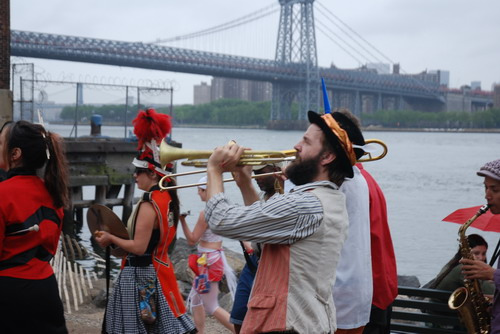
Many thanks to everyone who helped make today's Don't Demo Domino benefit a success. Despite the threat of rain, the bad stuff held off until the end, and we got to see The Black Tie Party, The Hungry Marching Band, Chesseburger, Vic Thrill (but no Saturn Missile) and the Wau Wau Sisters al fresco. Afterwards, everyone retired to the Brooklyn Ale House to catch an acoustic set by Nada Surf and enjoy some beer. Thank you one and all.
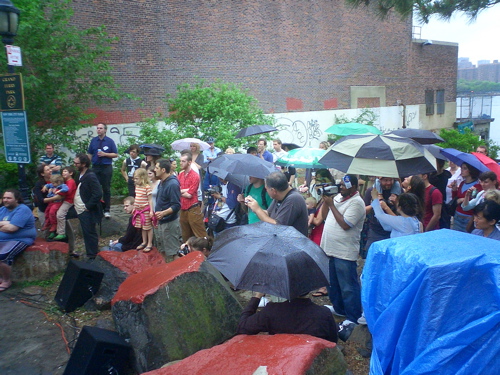

victhrill_crowd.jpg
The crowd at Grand Ferry Park, watching Vic Thrill in the rain.

The results? Over 850 people came to Grand Ferry Park and signed our Don't Demo Domino petition! These signatures will be added to the thousands who have already signed up to support preservation at the Domino site, and will help send the message to the Landmarks Commission and the City Council.

Very special thanks to Mikki Halpin and Act Local, who not only put on a tremendous show, but did an amazing job of organization and overcame any number of unexpected turns. Mikki put this whole package together, including recruiting many of the volunteers. And thanks to all of the sponsors: SchofieldFilms, Brooklyn Brewery, Underground Press, the Brooklyn Ale House and Chiara Sullivan.
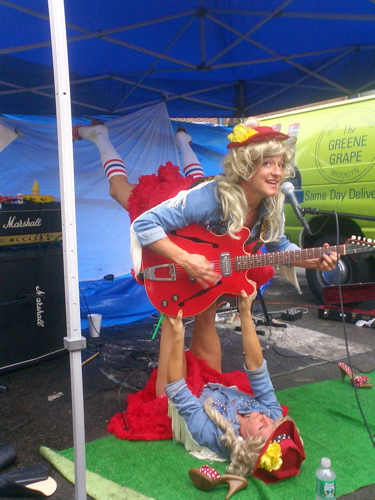
wau_wau.jpg
The wholesome down-home country stylings of the Wau Wau Sisters


Thanks too to all the volunteers who helped set up and clean up, and carried petitions in the rain, making sure that everyone signed on. And, of course, thanks to everyone who came to enjoy what started as a pleasant Sunday afternoon in the park. With the music and the crowds, it stayed pleasant, if not so warm and sunny.

We have many more events planned in the near future, so please stay tuned. And if you have photos of the benefit today, please email us the links at wpa[at]waterfrontalliance.org. Thanks!
June 4, 2007

More Thanks

ddd_flyer.jpg


We posted in a hurry last night, and left out a few key points. First, we completely forget to mention Butterfly Tech, the awesome sound techs who donated time and equipment (and made sure none of the talent was electrocuted in the rain!). As well, subtexture provided the great DDD graphics you see here.


And here are some links to our awesome sponsors:

And the talent:

More Followup

Hungry.jpg
Photo: rguskind (click for more...)


Lots of good links on the Don't Demo Domino friendraiser:

Brownstoner was there.

Gowanus Lounge was there.

NY1 had a story.

And GL covered it.

And Vic Thrill made it to Youtube (again, via GL).

June 6, 2007

Domino - inside and out

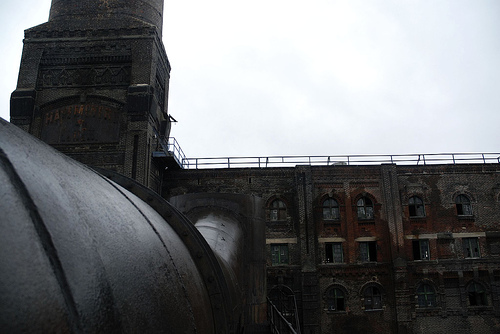
Domino_chimney.jpg
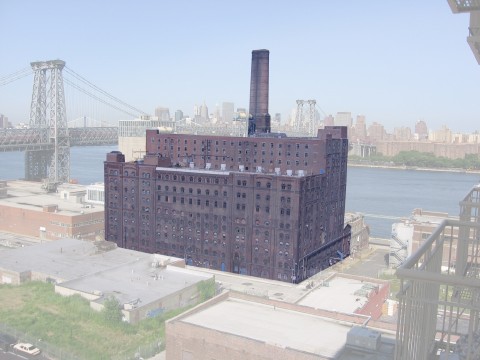
The west side of the main refinery building. The 1882 Havemeyers & Elder sign is at the base of the historic chimney; the oval stack above was added in the 1930s. Community Preservation Corporation, the developer, has said that it supports the preservation and reuse of this structure. If this building is retained, and the buildings to west are removed, this historic west facade will be visible from the East River.
Photo: Mercurialn

A group of photobloggers managed to get into the Domino refinery and document the interior of the building. There are some amazing pictures here, particularly for the industrial archaeologists among us. Most of these are interior shots, and don't show the architectural features of the most historic buildings. But they do give a great sense of the scale of the operation. And they are amazing.

All of the photos are here:

Nathan Kensinger

F-Trainer

Blue Jake

Mercurialn

There's also a great panorama from the roof of the Bin Structure (!) here.

And, Gothamist has a post on it as well.

June 7, 2007

Weekend Walking Tours: 9 - 10 June

Fort Wadsworth on the Narrows [MAS]

Sunday, June 10, 10:15 a.m. - 3:00 p.m.
$40 MAS members, $50 MAS members

Since the 1600s, the high ground on the Staten Island side of the Narrows has been militarily important. First Dutch, then English, then American forces have built coastal fortifications there. When it closed in 1994, this was the longest continuously used military site in the country. Here is your chance to experience the great fort as few have, from the rooftop of magnificent Battery Weed (with its restored lighthouse) to inside the counterscarp of Ft. Tompkins, where stones from 1814 fort (complete with Masonic symbols) were incorporated into the Civil War-era replacement. Please note: this tour is for those comfortable climbing stairs without handrails and walking in confined spaces. Leader: Phil Melfi: supervisory park ranger. Co-leader: Jack Eichenbaum, urban geographer, who will provide commentary on the history and development of the harbor from the deck of the Staten Island Ferry. A chartered bus will take tour participants from the St. George Ferry Terminal to Ft. Wadsworth and back. Reservations and pre-payment required: Call 212-935-2075. $40 MAS members, $50 non-members. Box lunch included. Meet promptly at 10:15 a.m. at the top of the escalotors, Staten Island Ferry Terminal (aka Whitehall). (Transit: #1 train to South Ferry, R train to Whitehall, #4, 5 trains to Bowling Green.)

McCarren Park Pool Design Planning Charette

mccarren_wet.jpg
Photo: Gowanus Lounge.

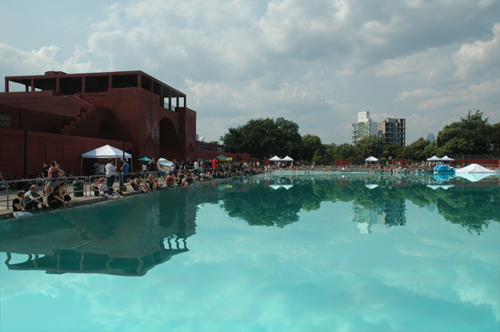
Next Wednesday, there is an important community design charette for McCarren Park Pool. This is your opportunity to sit down with your neighbors and give your input to what the future McCarren Park Pool should be. The architect for the redesign will be chosen in the coming days and will be on hand for the charette. This is open to the public.

Community Board #1, The Open Space Alliance (OSA), and Parks & Recreation invite you to an open public design and planning charette for McCarren Park Pool improvements:

WEDNESDAY, JUNE 13, 2007

5:00 PM & 7:00 PM (two sessions)

SWINGING 60'S SENIOR CITIZEN CENTER

211 AINSLIE STREET

(Corner of Manhattan Avenue)

Rather than simply responding to a design proposal, we invite you to participate in creating the design.

Parks will give a summary of the schedule for the project, and discuss budget considerations. Audience participants will break into small groups, with each table hosted by two facilitators that are architectural professionals for assistance. Each table will have a large scale plan of the pool area, templates of an Olympic size pool, a multi-purpose building, tracing paper, markers, etc.

The charge for the evening will simply be that the designs must:

1) Provide swimming

2) Provide year-round use

3) Preserve and reuse the existing buildings

Other than that, everyone is free to dream (within budget constraints). Each table has 30 minutes to sketch and discuss --- then each table will be given 5 minutes to present their ideas to the room. The recommendations will be synthesized by the project architects and presented at a follow-up community meeting.

We look forward to your ideas on improving McCarren Park Pool for future generations.

P.S. Should the number of attendees exceed the legal capacity of the room, provisions will be made for an additional workshop.

June 11, 2007

McCarren Pool Design Presentation

NYC Parks will present their proposal for the redesigned McCarren Park Pool on Wednesday, 13 June at the Swinging Sixties Senior Center, 211 Ainslie Street (corner of Manhattan Avenue). There will be two sessions, one at 5:00 p.m. and one at 7:00 p.m.

Sponsored by Community Board #1 and NYC Parks Department.

June 13, 2007

TONIGHT: McCarren Park Pool Design Charette

mccarren_wet.jpg
Photo: Gowanus Lounge.

Next Wednesday, there is an important community design charette for McCarren Park Pool. This is your opportunity to sit down with your neighbors and give your input to what the future McCarren Park Pool should be. The architect for the redesign will be chosen in the coming days and will be on hand for the charette. This is open to the public.

Community Board #1, The Open Space Alliance (OSA), and Parks & Recreation invite you to an open public design and planning charette for McCarren Park Pool improvements:

WEDNESDAY, JUNE 13, 2007

5:00 PM & 7:00 PM (two sessions)

SWINGING 60'S SENIOR CITIZEN CENTER

211 AINSLIE STREET

(Corner of Manhattan Avenue)

Rather than simply responding to a design proposal, we invite you to participate in creating the design.

Parks will give a summary of the schedule for the project, and discuss budget considerations. Audience participants will break into small groups, with each table hosted by two facilitators that are architectural professionals for assistance. Each table will have a large scale plan of the pool area, templates of an Olympic size pool, a multi-purpose building, tracing paper, markers, etc.

The charge for the evening will simply be that the designs must:

1) Provide swimming

2) Provide year-round use

3) Preserve and reuse the existing buildings

Other than that, everyone is free to dream (within budget constraints). Each table has 30 minutes to sketch and discuss --- then each table will be given 5 minutes to present their ideas to the room. The recommendations will be synthesized by the project architects and presented at a follow-up community meeting.

We look forward to your ideas on improving McCarren Park Pool for future generations.

P.S. Should the number of attendees exceed the legal capacity of the room, provisions will be made for an additional workshop.

June 14, 2007

National Trust: Brooklyn's Industrial Heritage Endangered

The National Trust for Historic Preservation announced today that it is listing Brooklyn’s industrial heritage as one of the nation’s 11 most endangered historic resources. This announcement should provide a major boost for the efforts of WPA and other groups who are working to preserve this industrial heritage for future generations. The listing recognizes that Brooklyn’s industrial waterfront is undergoing significant changes, and challenges the notion that the city is better off just erasing this heritage from our shores forever.

This announcement by the National Trust comes only a year after the Preservation League of New York State listed Williamsburg’s industrial heritage on its annual list of 7 endangered state resources. Taken together, these two listings are the best evidence we can think of that Brooklyn’s industrial heritage is an important (and threatened) resource that should be protected, preserved and made a part of Brooklyn's future. The National Trust and the Preservation League both recognize the significance – local, state and national – of our industrial heritage, and hopefully this recognition will translate into more sympathetic ears here in New York City.

As many of you know, the City’s Landmarks Preservation Commission has been very busy in our waterfront communities. In the past few years, the Commission has calendared or designated major resources such as the Austin, Nichols & Co. Warehouse, the Hecla Iron Works building, the Smith, Gray & Co. building, the New York & Long Island Coignet Stone Company building, the Thompson Meter Company building, the Eberhard Faber Pencil Factory historic district, and the Domino Sugar Refinery. LPC is also (hopefully) very near ready to calendar the Dumbo Historic District.

LPC could be doing more, but two things slow them up. The first is funding, and here the City Council has come through again, setting aside an additional $300,000 in the FY’08 budget for LPC (up from last year’s $250,000 incremental allocation). The second and more critical hurdle is the strong resistance of the real estate community and some members of the City Council to landmarking in general, and landmarking Brooklyn’s industrial heritage in particular. Of course this played out most famously in the Austin, Nichols & Co. fight, where LPC did the right thing in designating this magnificent Cass Gilbert warehouse. The designation was turned down by the Council, with Councilmember Simcha Felder famously describing the building as a “piece of trash”. Even Mayor Bloomberg’s veto was not enough to change the Council’s mind, and the undesignation of Austin, Nichols stood.

So now the National Trust has weighed in, and thrown its support behind the Preservation League, LPC and Mayor Bloomberg in saying that Brooklyn’s industrial heritage matters. This gives a huge and welcome boost to groups like WPA and DUMBO Neighborhood Association, who have been leading the efforts to protect and reuse industrial buildings. Once again, we will be able to point to a major endorsement of our agenda for preservation. Perhaps now, some of the naysayers will have a change of heart.

BTW - The nomination for the 11-most-endangered list was put together by the Municipal Art Society, with help from groups like WPA and DNA. MAS (which has been a tireless promoter of this cause for a number of years now) has put together a great web site on Brooklyn's industrial heritage. The NYTimes has more here.

June 15, 2007

Domino Update: Hearing Set

Domino_chimney.jpgPhoto: Mercurialn.


Just one day after the National Trust put Brooklyn's industrial heritage on its 11 Endangered List, some more good news. Landmarks has announced that the public hearing for the Domino Sugar Refinery designation will take place on Tuesday, 26 June 2007. The announcement says that the hearing will start at 9:30, but that may or not be the exact time for the Domino portion of the hearing. Stay tuned, and plan to attend.

McCarren Update: Designation Soon?

mccarren.jpg


Two nights ago, the Department of Parks held a community design charette for the McCarren Pool that was attended by hundreds of local residents. Some things were very clear - the community wants a pool; it wants entertainment; it wants year-round uses; and, it wants a bigger and better skateboard park.

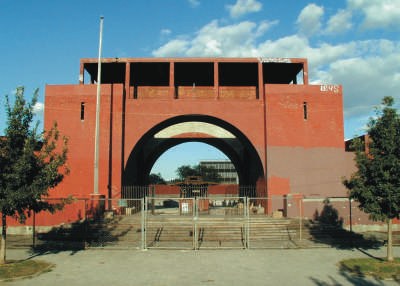
But hidden amongst everything else was this piece of news: the Parkies are saying that McCarren will officially become a NYC Landmark this summer, probably in July!

June 17, 2007

National Trust Follow Up

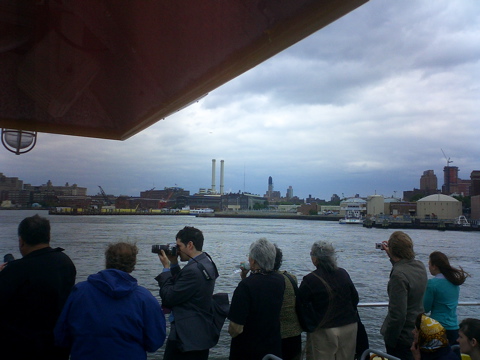
press_junket.jpg
Press junket on the NY Water Taxi, passing the Navy Yard.
Photo: WPA

Its been three days since the National Trust listed Brooklyn's industrial waterfront as one of the nation's 11 most endangered historic resources of 2007, and the coverage (and impact?) continues.

The following is a brief sampling of the articles and blog posts that have appeared on the subject. For more fun, type "Brooklyn waterfront endangered" into a Google news search - read all 194 entries.

In the papers:

New York Times
Daily News
Daily News (again)
Associated Press (via Phila. Enquirer)
Metro
amNY
Bloomberg
USA Today
Khaleej Times

On the air:

ABC News
NY1 News
WNYC

On the intertubes:

Brownstoner
Brownstoner again
Gowanus Lounge #1
Gowanus Lounge #2
Gowanus Lounge #3
Gothamist

Daily Intel
DNA
Architectural Record
Curbed
Curbed again
American Shipper
Lost City (a bit bitter, they are)
Kinetic Carnival

June 19, 2007

Weekend Walking Tours: 22 - 23 June

On the Waterfront: The West Village [MAS]

Saturday, June 23, 11:00 a.m.
$15, $12 MAS members

Christopher St. ends at the Hudson River where recently designated historic districts and glassy apartment towers are transforming the waterfront. We'll examine the area's salty past, viewing structures associated with the neighborhood's mercantile origins, as well as the former Bell Labs complex, now Westbeth, and the West Village Houses. The tour ends whee the High Line, scheduled to open as a public park in spring 2008, begins. Leader: Matt Postal, architectural historian. Meet inside the park at Sheridan Square, at the intersection of 7th Ave. and Christoper St.

Kleindeutschland [NYGBS]

Thursday, June 21, 5:30 p.m.

$15, $12 NYGBS members

Join us on a walking tour of Kleindeutschland, led by Paul Rush of “Dr. Phil’s Tours.” We’ll explore the area that was home to a thriving German community in the late 19th and early 20th centuries. Beginning at the Ottendorfer Library, the first circulating library in the city, we will also visit the former St. Mark’s church, home church of the congregation of the General Slocum disaster, Tompkins Square Park, among other sites. The tour will end at a German Biergarten for dinner (separate charge), Thursday evening, June 21, 5:30 pm.

June 20, 2007

Domino Landmark Hearing

Domino_roof.jpg


The Landmarks Commission has confirmed that they will hold the first public hearing for the designation of the Domino Sugar Processing House next Tuesday, 26 June, at 9:45. Those wishing to testify in support of designation will need to fill out a speaker's form at the Commission's hearing room. If you cannot attend the hearing to testify, we encourage you to submit a letter of support.

At Tuesday's hearing, LPC staff will make a presentation to the Commission regarding the results of their research on the site. Member's of the public will be allowed to testify, after which the Commissioner's will probably make comments regarding the designation. While it is possible that the Commission will vote then and there to designate, it much more likely that the hearing will be closed and the designation will happen at a later date. Future meetings will not include public testimony, though, so speak now...

The Landmarks Commission is located at 1 Centre Street, 9th Floor North. That's the Municipal Building, which is at the eastern terminus of Chambers Street. The Brooklyn Bridge station of the 4/5/6 and the Chambers Street station of the J/M/Z are underneath the building; the City Hall station of the R/W is about a block away. There is a security check to get into the building, so bring a valid ID and leave the sharp objects at home. And plan to arrive a few minutes early.

Letters of support should be addressed to:

Robert Tierney
Chairman
NYC Landmarks Preservation Commission
1 Centre Street, 9th Floor North
New York, NY 10007

(Or, you can use our handy email form, which is located in the Take Action section of our web page, over to the right there.)

June 26, 2007

UPDATE: Domino LPC Hearing

The Landmarks Preservation Commission held its first hearing on the Domino designation this morning. The hearing was held before a packed room of onlookers and speakers, and lasted just over an hour or so. So as not to bury the lede: no one spoke against the designation of the main Domino refinery building. Just about everyone favored the proposed designation, although some (like WPA) thought that LPC could go a little bit further.

After a presentation by LPC on the history of the refinery building and the site, the owner of the property, Community Preservation Corporation, was the first to speak. As they have in other venues, CPC spoke in favor of the refinery building. Michael Lappin, the chair of CPC, stated that their mission was primarily to build housing, but that CPC believes that the site is significant and that they can (with some considerable effort) adapt the refinery for new uses. Lappin was followed by Robert Silman, a noted structural engineer who has worked on numerous historic properties. Silman noted the structural challenges of adapting a building that has very few floors and a structural system that is actually underbuilt. Frank Sciami of Sciami Construction also spoke on behalf of CPC, and described the construction challenges that confront them in converting the building.

Sam Rockwell, representing Councilmember David Yassky, also testified in favor of the designation. Yassky noted that this should be a first step in the preservation of more of Brooklyn's - and the city's - waterfront.

A representative from the Pratt Center for Community Development gave very strong testimony not only favor of this designation but supporting preservation as an important part of community building in general. Pratt singled out the loss of the Dutch Mustard building and other industrial buildings as evidence of the problem, and denounced the practice of many in real estate market of pitting preservation against affordable housing. Their statement closed with a call for the city to establish a broader framework that would support both affordable housing and preservation as complementary goals.

Others speaking in favor designation were the New York Landmarks Conservancy ("enthusiastically supports"); the Society for Industrial Archaeology; the Historic Districts Council; the Society for the Architecture of the City; the Municipal Art Society; the Metropolitan Chapter of the Victorian Society of America; WPA (of course); and the North Brooklyn Alliance. All of these groups supported the designation, but also supported the idea of designating more than just one building. SIA raised the issue of former Domino buildings that are not part of this development site, something we thought was very important, and so far overlooked.

The only non-positive voice was that of Churches United, who testified (more or less) that they would be OK with preservation, so long as it didn't cut into the currently proposed number of affordable housing units (600+ in CPC's latest plan). One member of CU suggested that LPC base its decision to designate solely on the affordable housing question - an interesting proposition, given that that is not what LPC is empowered to do. Still, the bottom line for Churches United seems to be that do not support designation, but they do not oppose it either.

June 27, 2007

Press: The Domino Hearing

Yesterday's Domino hearing at Landmarks, in the news:

History and Homes May Mix at the Brooklyn Waterfront [NYT]
Queens Neighborhood Is a Landmark; Domino Plant is Likely to Become One [NYT Cityroom]
Domino refinery sign may be at risk [amNY]
Landmarks Commsssion Discusses Fate of Domino Sugar Factory [NY1] (not really sure that they were at the same hearing everyone else attended)
Domino Developer Hopes to Sweeten Housing Debate [News12]

Domino - A Guide

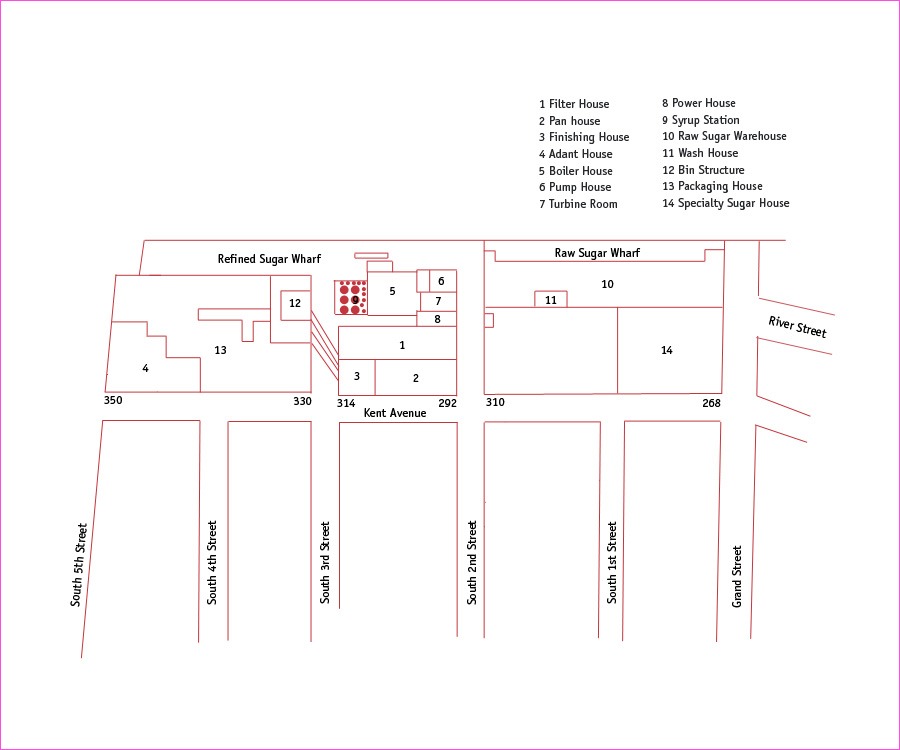
Click for larger version of site plan
Domino Refinery Site Plan: 2004 (click to enlarge)

With Domino in the news in a big way now, there is a lot of confusion about what is what. Almost two years ago, WPA prepared a detailed description of the Domino site and its history, which you can see here. For a little orientation, we are reprinting here the map we first published in that earlier piece.

The Landmarks Commission has proposed to designate the Processing House, which is the main building in the complex. Dating to 1883, and designed by Theodore A. Havemeyer, the Processing House contains three separate functions - in reality, three separate buildings. These are the Filter House (#1 on the map, above), where the sugar cane was processed into a syrup; the Pan House (#2), where the syrup was distilled into powder form; and the Finishing House (#3), where the sugar was graded and prepared for packaging.

In addition to the Processing House, there are two other structures that date to 1883, and were also designed by Theodore A. Havemeyer. These are the Adant House (#4), at the corner of South 6th and Kent Avenue, where sugar was processed into cubes (Gustav Adant patented an early process for manufacturing sugar cubes); and the Power House (#8), a two-story structure immediately west of the Processing House. WPA is asking that the Landmarks Commission look at these two buildings in addition to the main Processing House. Community Preservation Corporation, the owner and developer of the site, has said quite clearly that they support the designation of the Processing House, but nothing more. While WPA appreciates CPC's position, we believe that both the Adant House and the Power House could be preserved and incorporated into CPC's overall plans for the site without impacting the developer's stated goals of providing housing, affordable housing and open space. Quite the contrary, WPA believes that incorporating these buildings into the design would enhance the overall project.

The Domino site continued to develop well beyond the 19th Century - it did not cease operations as a sugar refinery until the 21st century. During the 20th century, Domino undertook two major building campaigns. The first was in the 1920s to early 1930s. It was at this time that most of the buildings to west of the Processing House were constructed, including the large gambrel-roofed Boiler House (#5), which now blocks much of the western facade of the Processing House, and almost completely engulfs the Power House. The Raw Sugar Warehouse (#10), a handsome two-story brick building at the north end of the site was also constructed at this time. The second building campaign was undertaken in the 1950s and early 1960s. Most of the southern portion of the site was redeveloped at this time, and many buildings dating to 1883 were demolished at this time. It was at this time that the Bin Structure (#12), the tall concrete silo building with the glass crown and the neon Domino Sugars sign, was constructed,

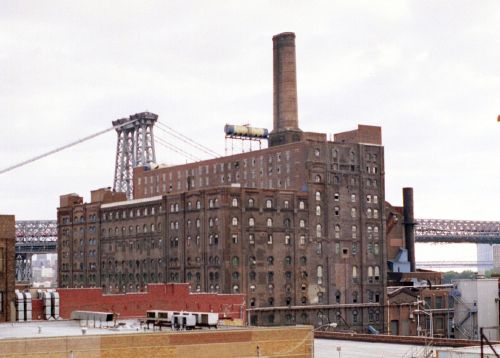
Domino- The Processing House

Domino Sugar Processing House
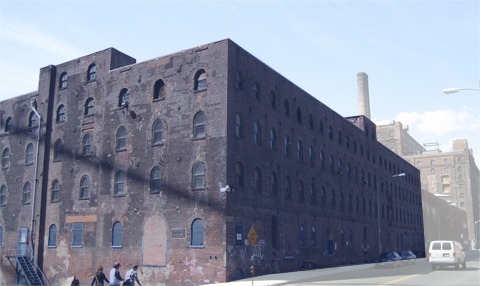
Domino Sugar Refinery, Processing House, view looking west towards Kent Avenue
Photo: michaelsharon


If there is one thing that everyone (or at least everyone at Tuesday's Landmarks hearing) seems to agree on, it is that the Domino Sugar Processing House should be a New York City Landmark. Preservationists, neighborhood activists, the developer and affordable housing activists all agreed that this complex of three buildings was worthy of designation.

Highlighted in the photo above, the Processing House is really a complex of three buildings serving three separate functions. The western portion of the building, 12 stories tall, is the Filter House. The eastern portion of the building, 10 stories tall, contains the Pan House and the Finishing House. It was within this one building, er complex, constructed in 1883, that raw sugar cane was converted into powdered sugar - at the rate of 3 million pounds a day.

The Processing House is certainly the most architecturally distinguished building on the site, with its round arch window openings and distinctive brick corbeling at the window heads and cornices. Although largely obscured by later buildings to the west (river side), the base of the original chimney stack is still visible (there are some fantastic photos here). The tall oval smoke stack was a later addition, constructed in the early 1930s.

The top of the Processing House has been altered over time. The Filter House originally included a pair of pyramidal-roof towers at the north and south end of the building. These were demolished in the 1950s, and the existing east wall of the Filter House - which almost looks like an addition - was constructed. The decorative parapets of the Pan and Finishing House along Kent Avenue were also demolished at about this time. The original Domino Sugars sign was located on top of this building - it appears that it was removed in 1961 or so, when the existing sign was installed on the Bin Structure.

June 28, 2007

Domino - The Adant House

Adant House Domino Sugar Refinery, Adant House (1883)
Photo: nautical2k

The Adant House, which sits at the corner of South 5th and Kent, is one of the buildings that WPA has Landmarks to add to its designation. The building was constructed as part of the 1883 rebuilding of the Havemeyers & Elder Sugar Refinery, and was used for processing sugar into cubes (in a process patented by Gustav Adant in the late-19th century). The Adant House was originally 6 stories tall, with a penthouse at the seventh story, and was topped by the corbelled and pedimented parapets that were a hallmark of the original refinery design. In the 1950s, Domino cut the building down to four stories.

Except for the decorative parapets, the design of this building was much more utilitarian than that of the main refinery. However, we feel that this building, together with the main refinery, form a complex of 19th century factory structures that better tell the story of the sugar refining process, and better tell the story of the sheer scale and dominance of the Havemeyers sugar refining operations. The building also relates very directly to the industrial buildings immediately across Kent Avenue (which are now condos).

The property's owner, CPC Resources, has argued that preserving this building would not fit in with its development plans. WPA strongly disagrees - the CPC plan calls for a building of roughly 6 to 8 stories at this location. The Landmarks Commission would surely approve an addition to this building to bring it back to its well-documented historic height. So in essence, CPC is proposing to take down a building and replace with an almost identical height building. That is the Dutch Mustard scenario all over again - instead of a more interesting design that melds old and new, simply tear down the old and replace it with something far less interesting. Saving this building would enhance the overall design of the project, be more responsible from an environmental point of view, and would not impact the ability of the project to provide retail, affordable housing, or luxury housing. This building even has larger window openings than the main refinery.

In short, saving the Adant House could easily fit in with the development plans, rather than thwarting them. Even if LPC refuses to add this structure to the designation, WPA hopes that CPC will see the benefits of keeping the Adant House in some form or another.

About June 2007

This page contains all entries posted to WGPA in June 2007. They are listed from oldest to newest.

May 2007 is the previous archive.

July 2007 is the next archive.

Many more can be found on the main index page or by looking through the archives.

Creative Commons License
This weblog is licensed under a Creative Commons License.